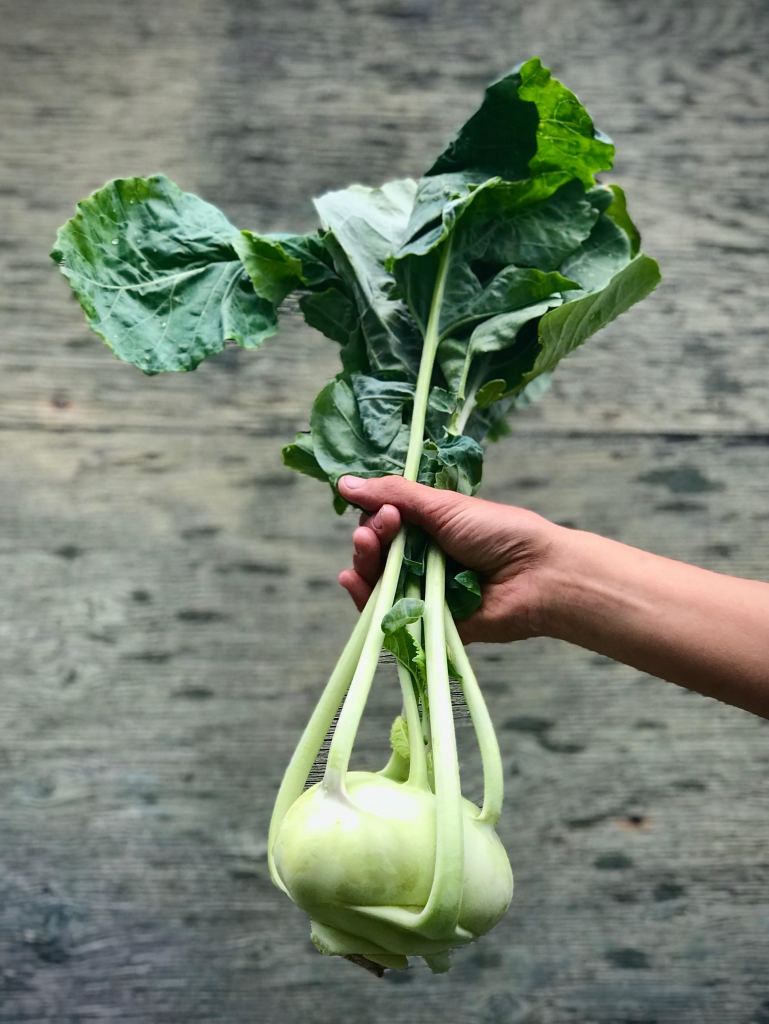
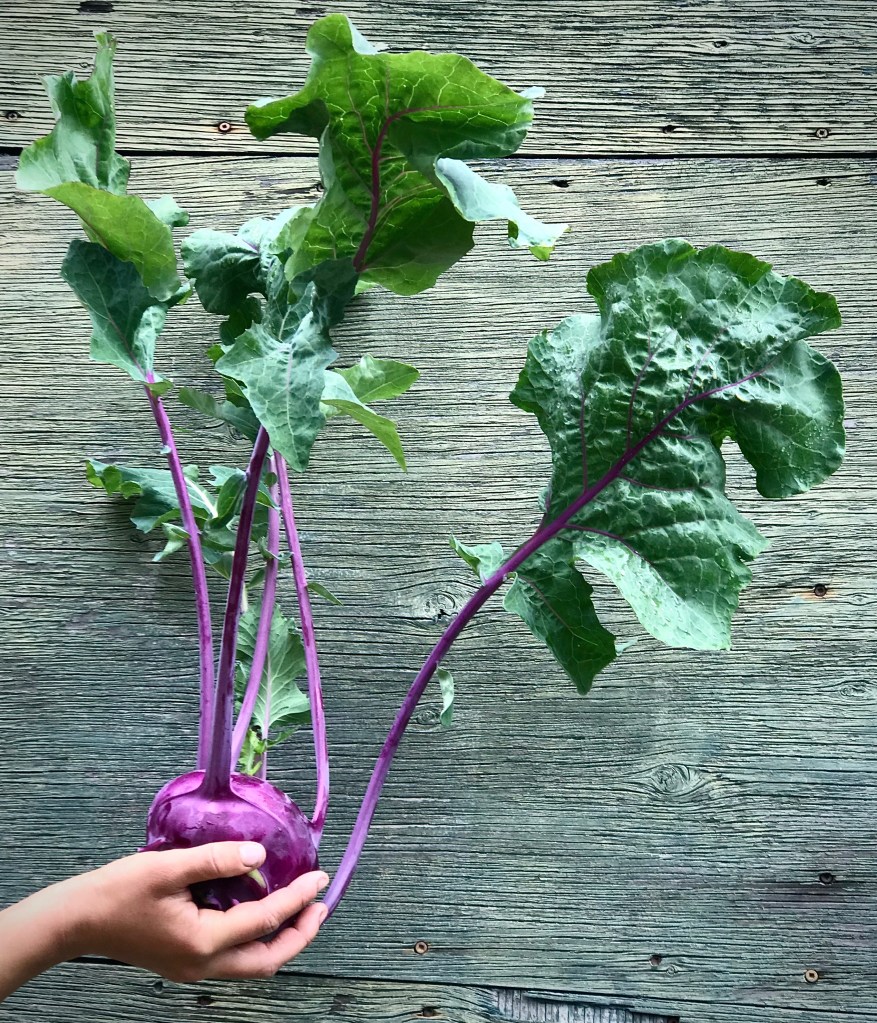
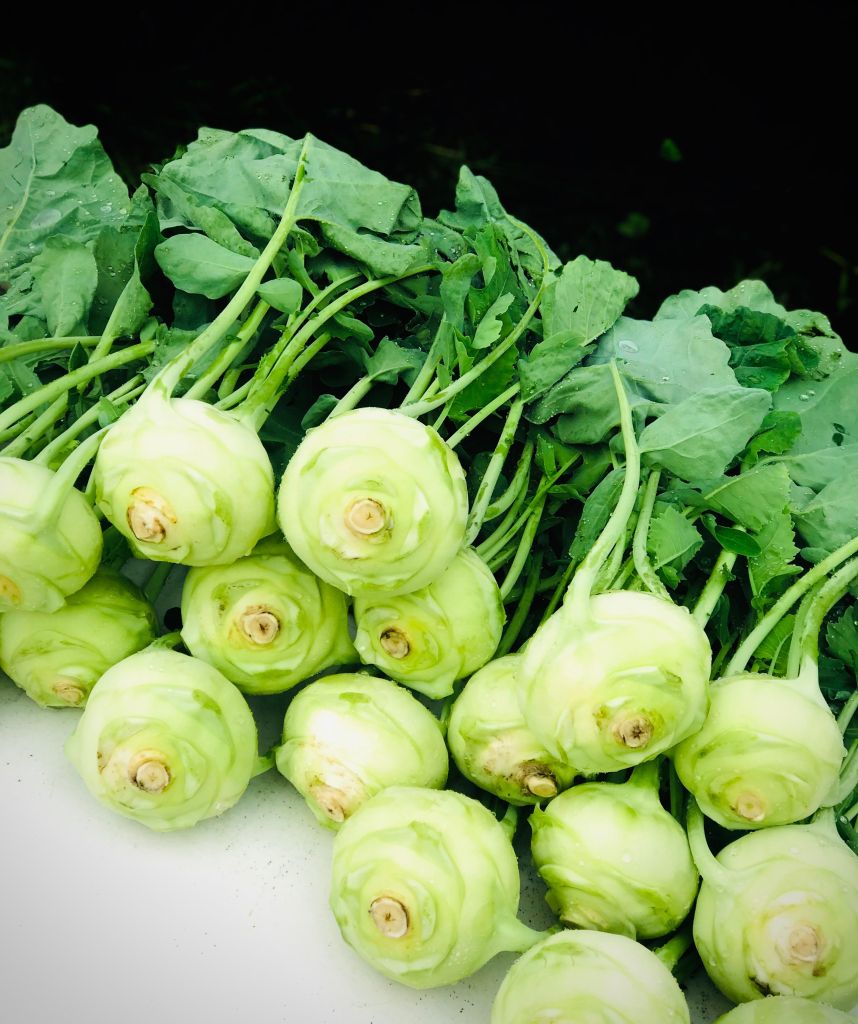
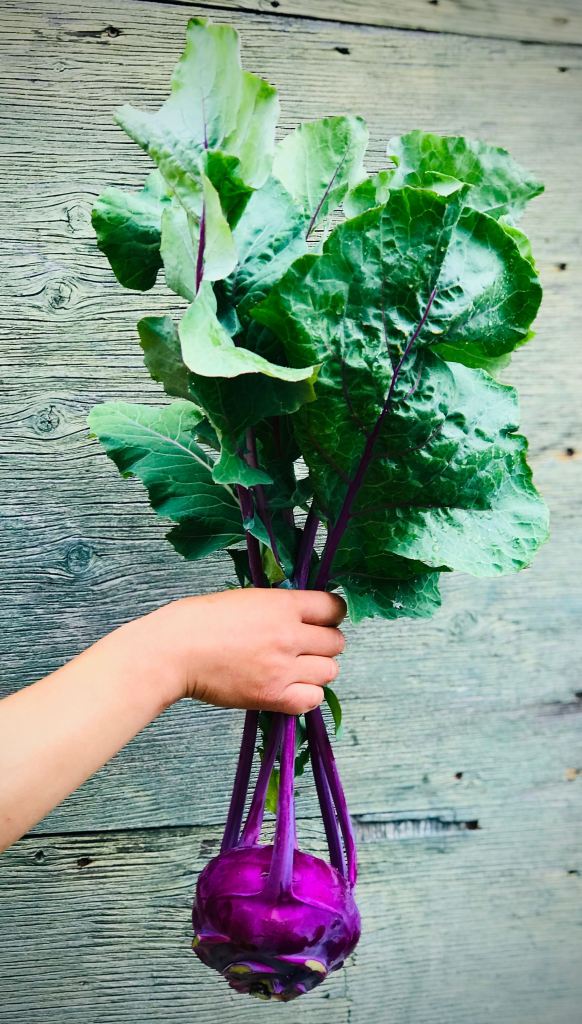
Have you ever heard of Kohlrabi? This weird vegetable club highlight is a member of the brassica family, meaning it is related to broccoli, cabbage and brussel sprouts. It grows vigorously in the cooler seasons, making it a fantastic spring and fall staple. It also acts as an excellent storage crop and when properly stored, can potentially last the entire winter!
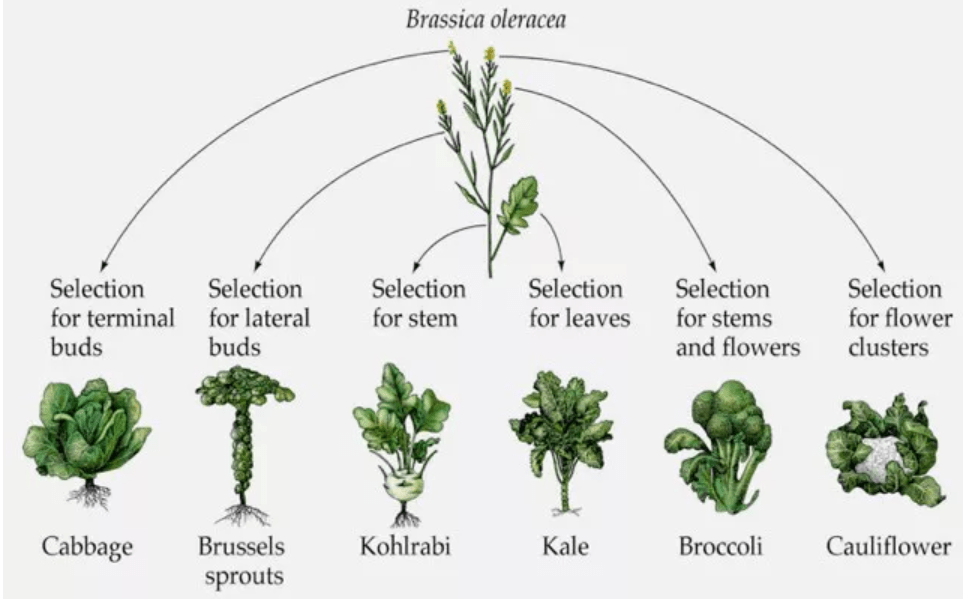
If you take a closer look at the genetics of kohlrabi, it comes from the ancient wild mustard plant. Over the evolution of this ancient brassica ancestor, several mutations occurred that caused its stem to thicken. After many years of growing and accumulating the new “thick stem” gene, the vegetable eventually evolved into today’s modern kohlrabi. This is actually how most modern brassicas came to be. They evolved from the same ancient wild mustard ancestor-but different genetic mutations resulted in each developing a different “preferred trait”. Broccoli contains the evolved flower, cabbage contains the evolved terminal leaf bud, brussel sprouts contains the evolved lateral leaf bud, and kohlrabi contains the evolved stem.
Kohlrabi has a crisp and sweet flavour for a vegetable. It has a cabbage-like flavour with hints of pear-like sweetness. Its texture is crisp and crunchy.
My friend and former co-worker from Plenty Wild Farms, Enid, is allergic to apples. She eats Kohlrabi sliced and raw as an apple replacement. I personally love to eat it roasted with salt and butter in a roasted vegetable medley. Ive also made a delicious cream of kohlrabi and kale soup. It is also fantastic shredded and used in a Coleslaw (or Kohlslaw, haha) instead of cabbage.

 Laughing Radish