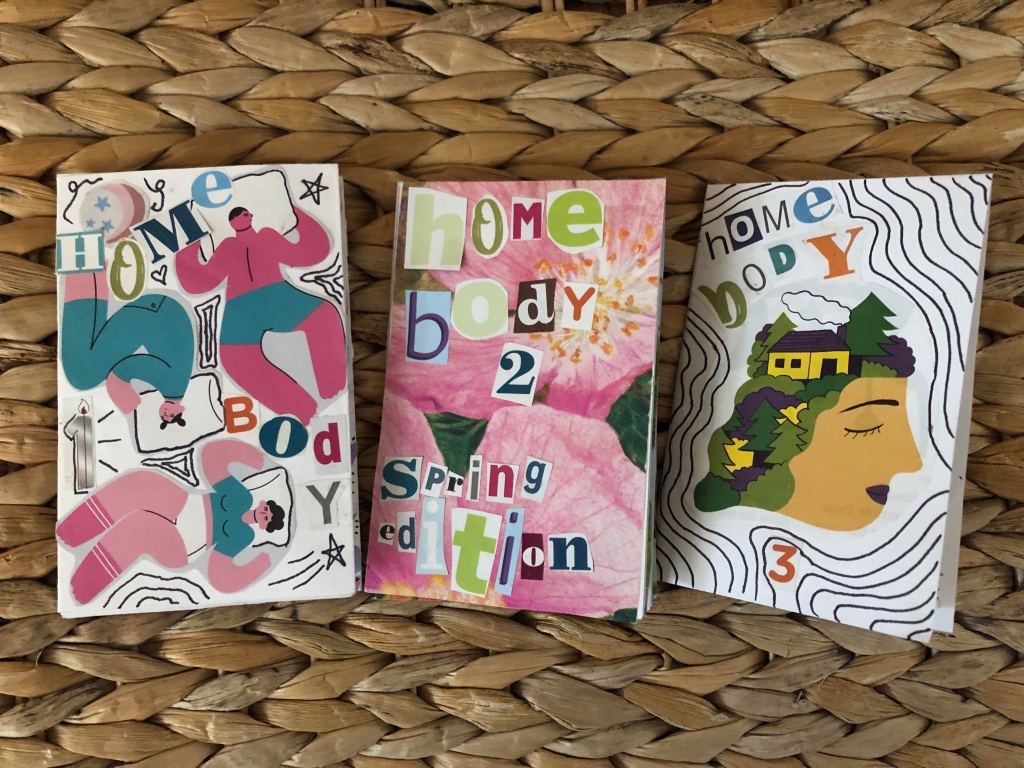
Come on out to the first Laughing Radish Art and Zine Market, as part of the Zine Scene Tools for Social Change project with Arts Ottawa and Articipate.
Details about the event can be found on the Shenkman Art Centre website at the link below!
The Zine Scene: Tools for Social Change is a local “Zinester in Residence” project, generously funded by Arts Ottawa through their ARTicipate program, and supported by the Shenkman Art Center.
The Zine Scene: Tools for Social Change is a reflection into the impact of zines as tools for social change and equity throughout history, as well as in modern society.
Zines have historically been used as radical tools for change, beginning with the “little magazines” of the Harlem Renaissance. They have been a key element of various underground racial, queer and feminist movements of the 60’s through 90’s and once again they are resurfacing to support modern day advocacy.
PURPOSE: The purpose of this project is to create a collection of zines about various social issues, as well as their role in advocacy movements. We will then distribute these zines to major community hubs, mirroring the historical method of information sharing and mutual aid in current times. Finally, this project aims to educate the public about and build our local zine community- furthering our collective impact and personal role in social justice!
The project is broken into 2 phases.
Phase 1 is “Develop & Create”, where artists, activists and zinesters from across Ottawa and beyond gather to create a collection of zines around modern day issues we are passionate about. This will take place at the Shenkman Arts Center, in the Emmy & Victor Abboud Music Studio, from June 19, 20, 28 & 29th. You may come for a single day, or attend all of them.
A small stipend will be given to artists who contribute to our zine collection, based on the number of days you attend the program.
We recognize and value diverse lived experiences. We want to hear your story, amplify your perspective and help advocate for the social issues we are most passionate about! Is there a topic you are passionate about? Whether its food security, OC Transpo, Queer/Trans experiences, Race/culture, anti-bullying, embracing your authentic self, special interest and neurodiversity, witchcraft, third space advocacy, and so much more- we want you to contribute!
Support & guidance will be provided to all participants, so beginner zinesters welcome! This program has been created with equity, accessibility and inclusion in mind.
To register for the zine creation residency, please click the link below:
Phase 2 & 3 are “Share & Support” and “Celebrate & Build Community”, and they consist of distributing the zine collection to community hubs across Ottawa, as well as hosting a Zine Market at the Shenkman Arts Center on July 20th, to celebrate our achievement, build community and network with local zinesters/social advocates.
To register as a vendor at our zine market, please click the link below:
Ultimately this project will blend modern and historical social justice, with community building, resource sharing and interpersonal mutual aid. We hope to see you there!
Earlier in the year, I received a message from a teacher at Buckingham Elementary school about the new garden the school is starting this year. She also shared a story about their seed order being cancelled and not being able to make another order and receive it in the mail in time to start seedlings. I just so happened to be going through my seeds that week and had a big pile of seeds that I wasn’t planning on using this year (I always save more than I will actually need)- so the school’s new garden seemed like the most logical people to take my excess seed!
Laughing Radish is proud to have made a donation of over 33 varieties of seed, totaling a couple thousand seeds to Buckingham Elementary’s new garden. The students started the seeds over the winter as part of their class science lessons, then planted them into their new school garden in the spring.
Included in the seed donation are many staple kitchen vegetables, herbs, tea plants and a variety of native flowers. They are bound to create a wonderful, diverse garden that benefits their community, as well as the wildlife and pollinators living in the region.
Way to go Buckingham Elementary!
Seeds in their new garden…
N – Indicates native plant
Flowers/herbs (17)
Amaranth – Love Lies Bleeding
Borage
Blue Vervain – N
Calendula
Chamomile
Catnip
Chives
Cut leaf coneflower – N
Evening primrose – N
Grey-headed prairie coneflower -N
Joe Pye Weed (purple) -N
Lovage
Quinoa – Red Head
Smooth aster -N
Sunflower (Branching)
Tall tickseed – N
Yarrow – N
Vegetables (16)
Beans- Misc Pole (green purple and speckled varieties)
Beans – Orca (bush)
Cucumber – Marketmore
Peas
Popcorn – Purple variety
Pumpkin
Pepper – Mocha Swirl (sweet)
Swiss Chard – Bright Lights
Tomato -Green zebra
Tomato – White cherry
Tomato – Indigo rose
Winter Squash – Buttercup
Winter Squash – Jamaican Pumpkin
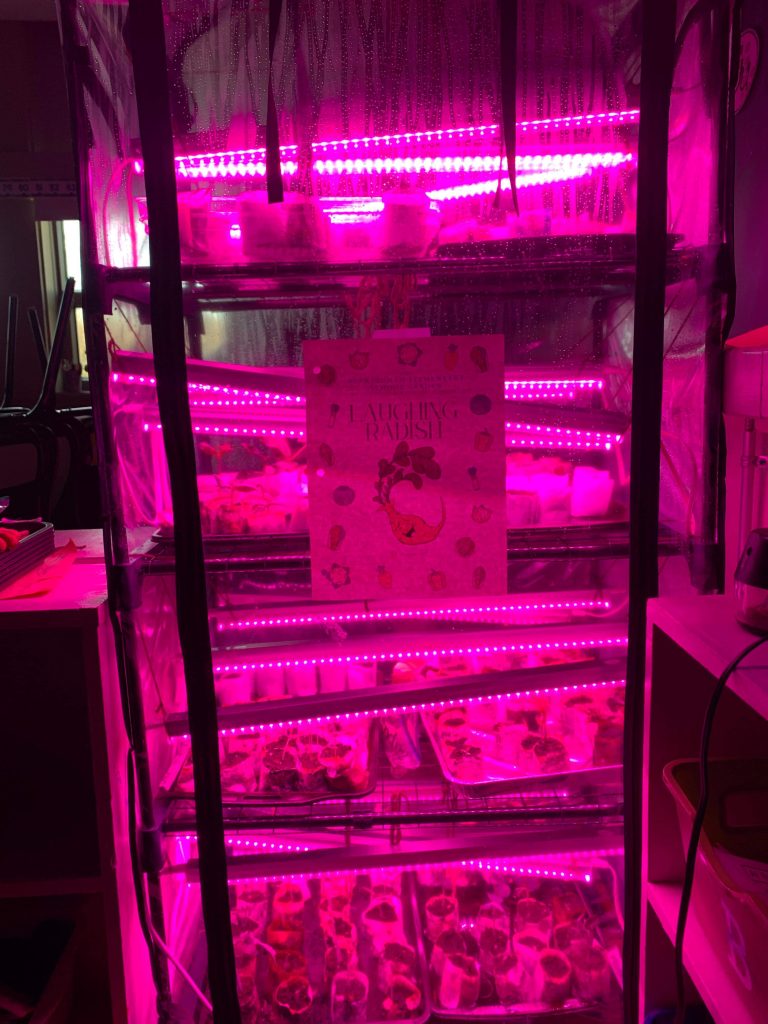
Seed starting at Buckingham Elementary. Each class at the school was responsible for a handful of seed varieties
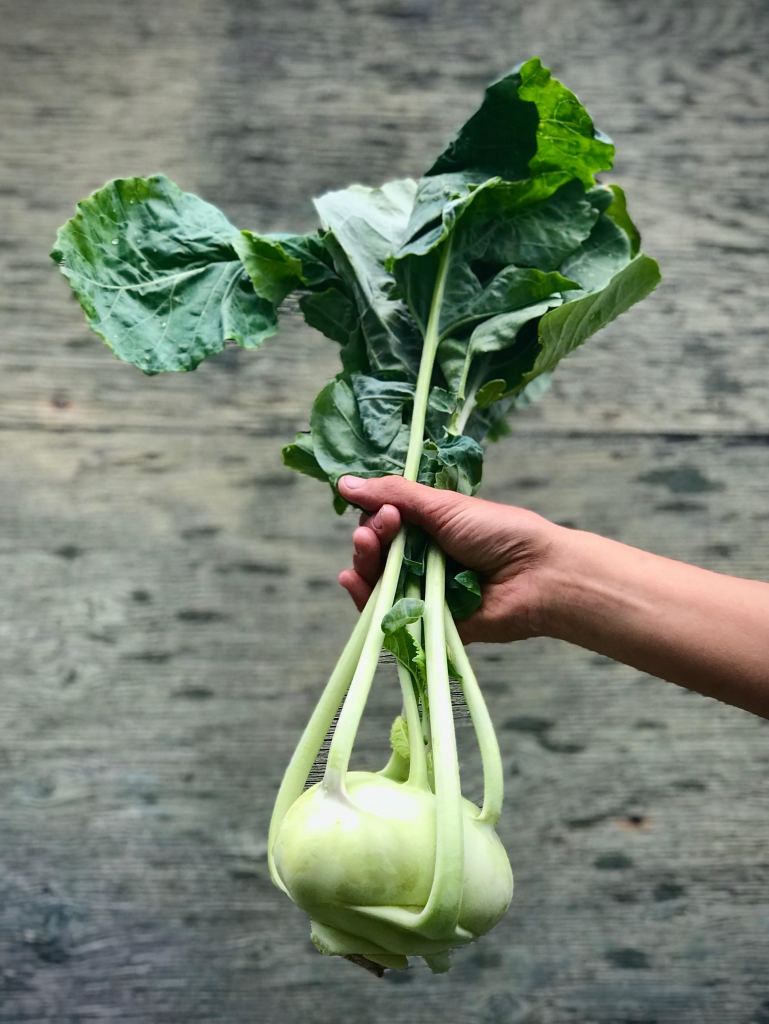
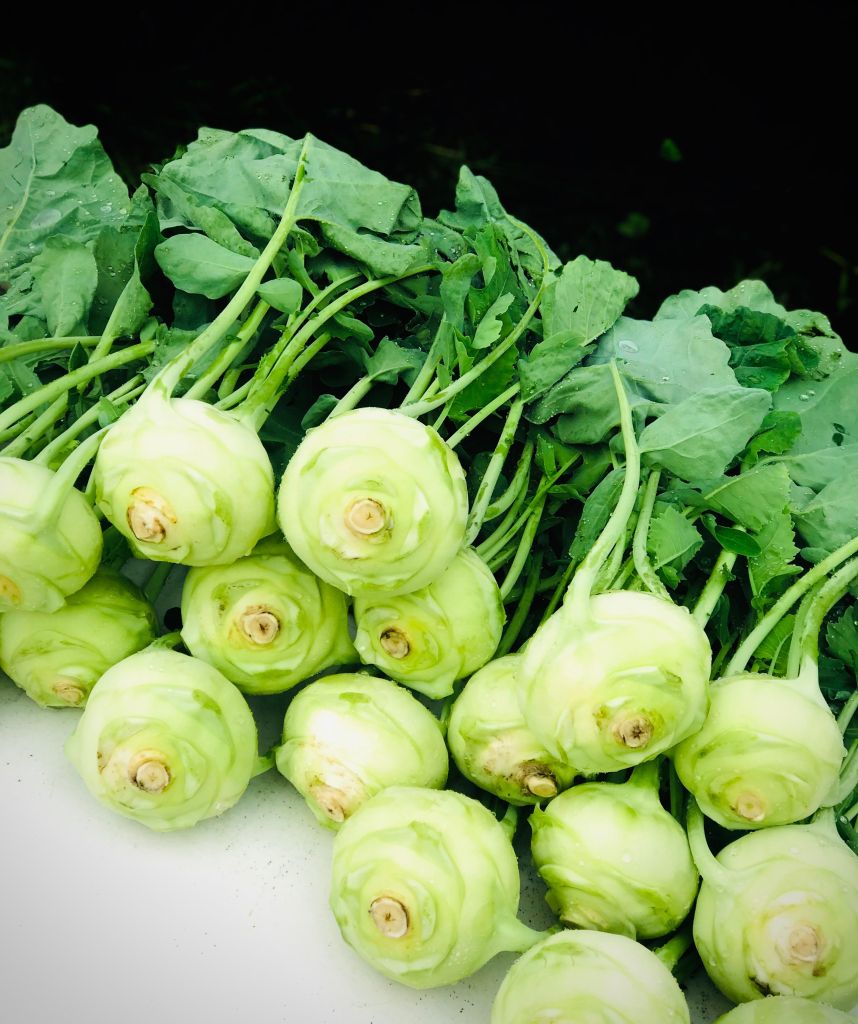
Have you ever heard of Kohlrabi? This weird vegetable club highlight is a member of the brassica family, meaning it is related to broccoli, cabbage and brussel sprouts. It grows vigorously in the cooler seasons, making it a fantastic spring and fall staple. It also acts as an excellent storage crop and when properly stored, can potentially last the entire winter!
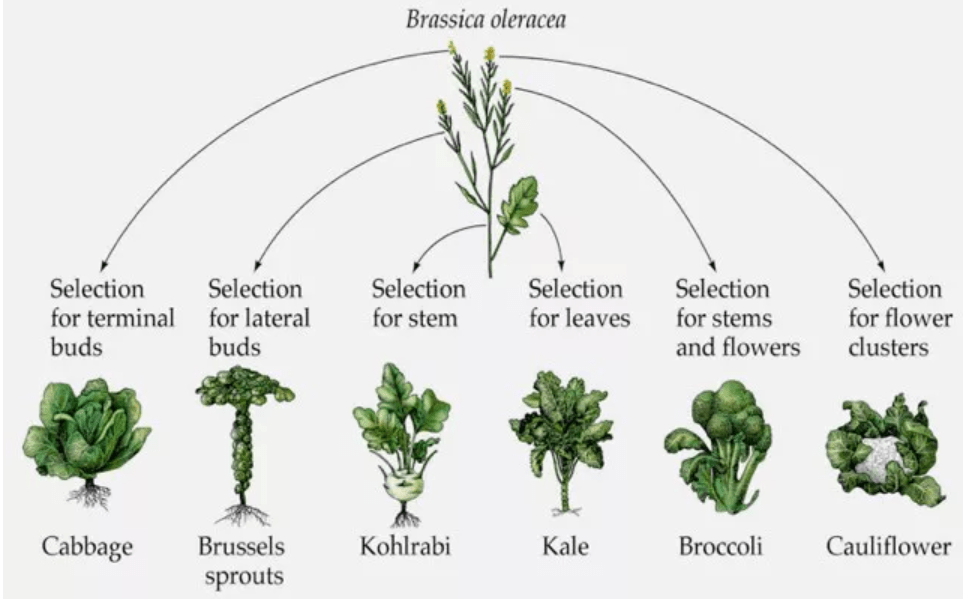
If you take a closer look at the genetics of kohlrabi, it comes from the ancient wild mustard plant. Over the evolution of this ancient brassica ancestor, several mutations occurred that caused its stem to thicken. After many years of growing and accumulating the new “thick stem” gene, the vegetable eventually evolved into today’s modern kohlrabi. This is actually how most modern brassicas came to be. They evolved from the same ancient wild mustard ancestor-but different genetic mutations resulted in each developing a different “preferred trait”. Broccoli contains the evolved flower, cabbage contains the evolved terminal leaf bud, brussel sprouts contains the evolved lateral leaf bud, and kohlrabi contains the evolved stem.
Evolution of modern brassicas from the common wild mustard ancestor
Kohlrabi has a crisp and sweet flavour for a vegetable. It has a cabbage-like flavour with hints of pear-like sweetness. Its texture is crisp and crunchy.
My friend and former co-worker from Plenty Wild Farms, Enid, is allergic to apples. She eats Kohlrabi sliced and raw as an apple replacement. I personally love to eat it roasted with salt and butter in a roasted vegetable medley. Ive also made a delicious cream of kohlrabi and kale soup. It is also fantastic shredded and used in a Coleslaw (or Kohlslaw, haha) instead of cabbage.
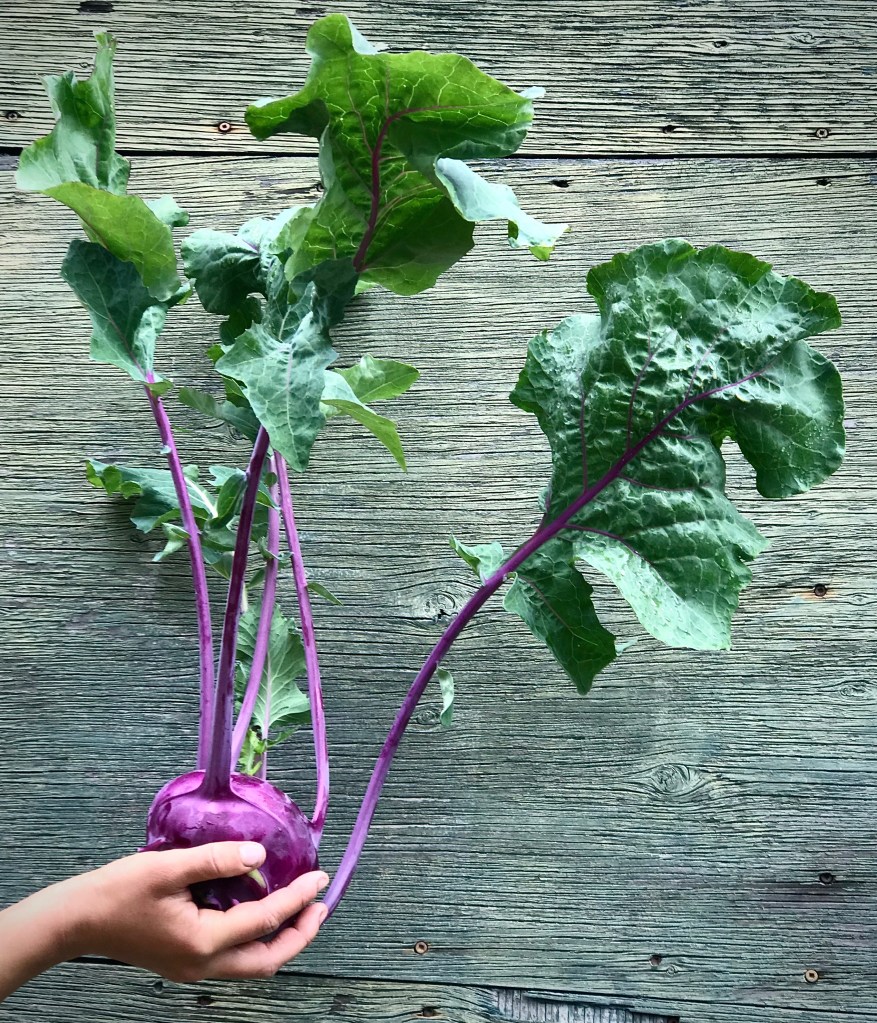
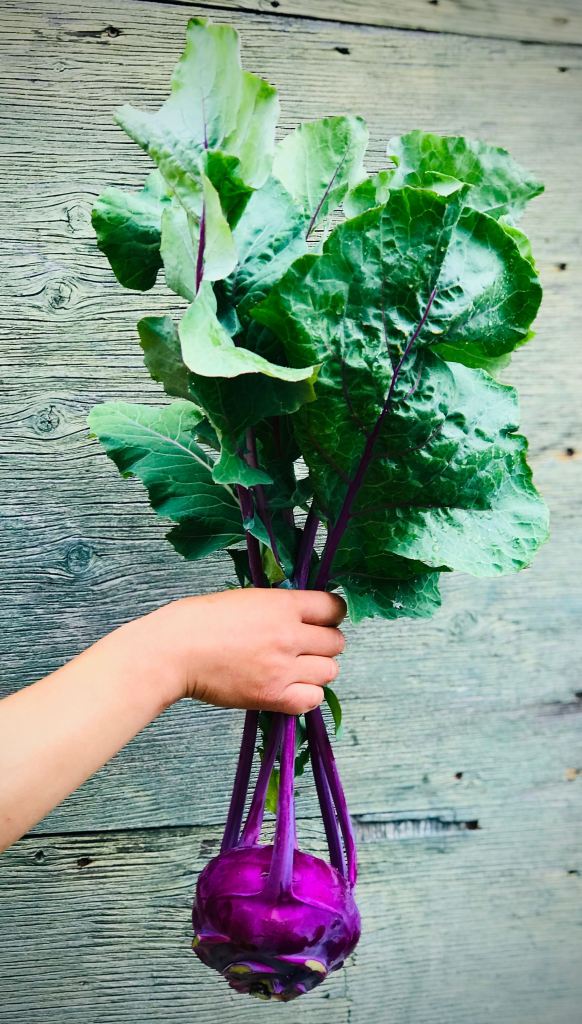
Purple Kohlrabi: Tastes the same as the green variety, but with purple skin and crisp white flesh.
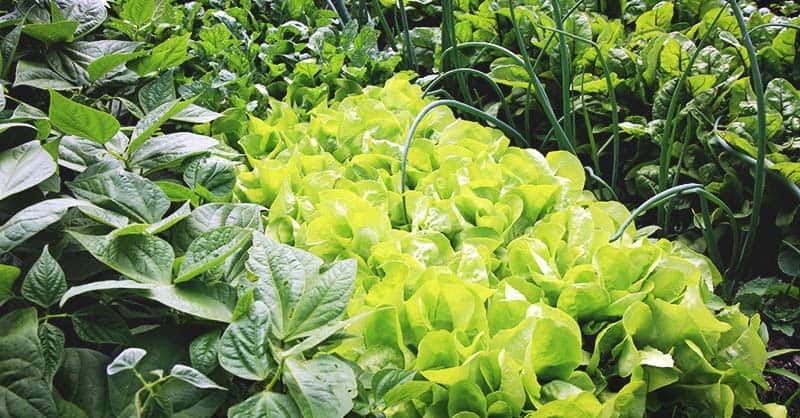
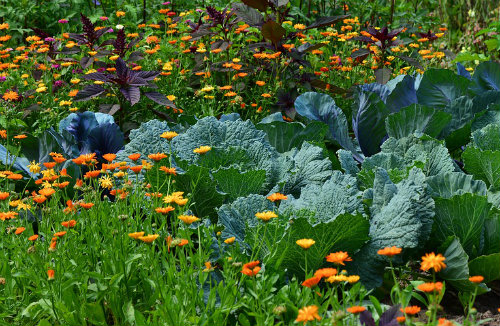
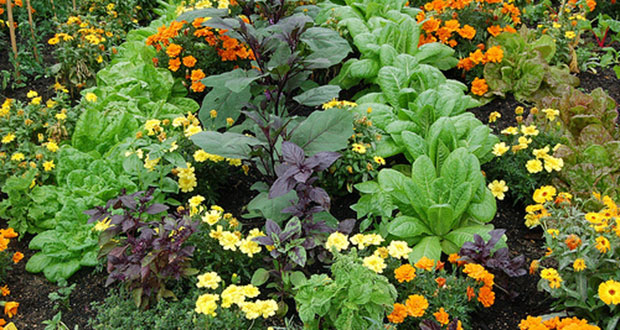
Intercropping is a sustainable agricultural technique that involves the intermixed planting of different crops in very close proximity. It is an all encompassing term that can be performed in a variety of ways, such as by growing crops that utilize different regions of space within a single row (Ex: a root crop interplanted with an above-ground fruiting crop in a single row), or by planting a second crop in the space between the rows of the first crop’s bed. The goal of intercropping is to have multiple crops within close enough proximity that the plants can interact with one another (Mohler & Stoner, n.d.), thus mimicking what happens in natural ecosystems.
When plants are allowed to interact with each other, they create diverse, biological systems that not only benefits the plants involved, but also the soil and biota (microbes, insects, pollinators, wildlife, etc.) that live within the system.
Intercropping improves the sustainable system in a variety of ways:
Use of resources
When multiple crops are interplanted in close proximity, they may be able to use the surrounding resources more effectively than if only a single crop was planted (Mohler & Stoner, n.d.). For example, intercropping lettuce within a bed of poorly germinated carrots allows you to make better use of the space, an all-important resource in farming. The carrots utilize the underground space and the lettuce uses the above ground space, thus competition between crops is eliminated. Plus, the non-germinated portions of the carrot bed are now being efficiently utilized instead of wasted, which increased the overall income this bed produces. Intercropping can also permit resources such as sunlight, water and soil nutrients to be utilized more efficiently through careful planning of the intercrop pairings.
Lower pest density
Intercropping is a useful pest management technique. When multiple plant types are grown together in polyculture, the diversity confuses insect pests – especially those that feed on a single specific crop. Additionally, if the crop pairing is well planned the companion plants can be used to repel certain pests or attract beneficial predatory insects – who in turn help reduce the pest load (Mohler & Stoner, n.d.).
Improves soil structure
Intercropping improves soil structure in that your soil is held together by a diversity of different roots (Engels, 2016). A tap-rooted plant will help break up compaction and aerate the soil, and a fibrous rooted plant will prevent erosion and help absorb excess water after heavy rainfalls. When these two root types work together, they improve soil structure and quality while occupying different regions of space, therefore avoiding resource competition.
More Financial Stability:
Intercropping, because it naturally incorporates more diversity, also provides the farmer with a more diverse product line. Instead of growing one crop type in a certain area, multiple are grown. If a crop fails, the farmer can rely on sales of the second crop rather than losing an entire season’s worth of income.
Challenges associated with intercropping
Crop rotation is an essential aspect of sustainable farming and it is made much more difficult when intercropping is used. When plants of different families are grown in close proximity, you must plan your rotation so that neither of those families are repeated in the same block for at least 3 years (Mohler & Stoner, n.d.). This becomes very complicated when each field block contains more than one plant family. Thoroughly planning your crop rotation in advance is essential when using the intercropping technique.
Intercropping also requires very careful planning so that the crops do not negatively harm the system through competition of root space, aboveground space or nutrients (Engels, 2016). Poor plant pairings may also inhibit the growth of the intercrops, so a thorough understanding of companion planting is a must. Additionally, a plant pairing that worked in the past may not necessarily work in the future if the environmental conditions change and one plant becomes either favoured or hindered, throwing off the system’s delicate balance (Mohler & Stoner, n.d.).
Finally, intercropping requires precise timing for planting as the crops used will likely grow at different rates (Mohler & Stoner, n.d.). You must be able to balance the growth of both crops through timed planting so that the quicker crop doesn’t overgrow or cast shade and ultimately hinder the growth of the slower crop.
Examples of Intercropping:
The most well known example of intercropping is the Three Sisters Garden. This traditional indigenous intercropping technique utilises the growing habits of corn, beans and squash to grow a large volume of food, sustainably, in a small space. The corn has very shallow, fibrous roots which holds the soil together, preventing erosion and helping improve soil stability. It grows tall and becomes a support for the beans, whose roots fix nitrogen, adding to the soil nutrition. Finally, squash, a deep-rooted plant feeds from water and nutrients below the reach of the corn and bean roots, minimizing competition. It also grows very large and leafy, blocking out weeds and keeping pests such as racoons away from the corn and beans. All three of these plants interact and support each other. In fact, they grow better when intercropped together than when grown individually (Kimmerer, 2013).
Another example of intercropping is planting lettuce around the base of tomato plants. As the tomatoes grow, they vine up and away from the soil. Lettuce remains close to the soil even when fully mature and acts as weed suppression, blocking out weeds that may impact the tomato growth. This intercropping allows you to maximize the profitability and space within your bed AND minimizes the amount of weeding required to keep the row tidy.
Real World Statistics:
According to a study put on by the University of Manitoba, the technique of intercropping produced a Land Equivalency Ration (LER) of above 1, meaning the crops produced higher yields when intercropped than when grown in monoculture for the same area of land use, for all types of intercrops studied (University of Manitoba, 2014). This study also found that the more intercropping occurred, the lower the pest and weed pressure; so they recommend growing as many different companion plants together as feasibly possible (University of Manitoba, 2014). Finally, on a conventional scale, intercropping produces overyield in about 75% of cases and is highly feasible (University of Manitoba, 2014).
According to a study performed in Australia by Lithourgidis, Dordas, Damalas, and Vlachostergios, “Various types of intercropping were known and presumably employed in ancient Greece about 300 B.C” (Lithourgidis, Dordas, Damalas & Vlachostergios, 2011), so this method of agriculture has truly withstood the test of time. Additionally, intercrop systems are currently being used for an estimated 15-20% of the world’s food supply, primarily in Indigenous and global south communities (Lithourgidis, Dordas, Damalas & Vlachostergios, 2011).
Conclusion:
Often misunderstood, the role of farmers is to feed their community, not the world. If farmers worldwide switch to diverse, small-scale, intercropped agricultural systems, a lot of the problems that persist in agriculture today will improve. They will be able to provide their local communities with a diverse offering of highly nutritious fruits, vegetables and animal products while regenerating the health of the ecosystem, rather than draining it. Not only does intercropping increase yield, it promotes an improved use of resources, reduced pest and weed pressure, healthier soils and more financial stability. Overall, the use of intercropping is an extremely beneficial sustainable farming technique that should be employed by farmers, replacing conventional systems. We use intercropping at Laughing Radish Eco Farm because it allows us to maximize our farm’s efficiency while promoting the health of our overall system. It might take more planning than a traditional market garden, but the extra planning is worth it. We are rewarded with a beautiful, healthy, holistic ECO farm.