
Uncategorized

The story of Michaela. Get to know your local farmer.

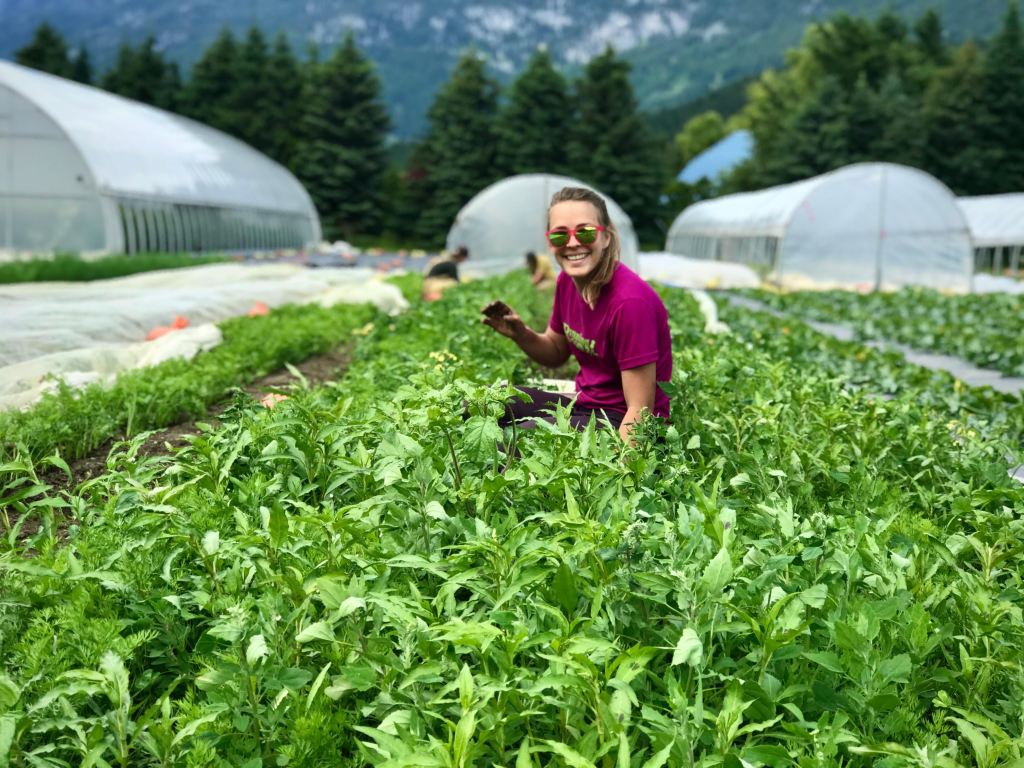
Photograph taken while farming in Pemberton, BC at Plenty Wild Farms, as part of my Sustainable Agriculture Coop

My name is Michaela and I am the owner of Laughing Radish Eco Farm.

I would like to share a little bit about myself, so you know exactly where your food is coming from and more importantly, WHO is growing it for you.

I was born and raised right here in the nation’s capitol, so I’m a city girl through and through. However, my adventurous side has called me into the wild on multiple occasions and lead me to develop a taste for living in harmony with nature. So the countryside is what my heart yearns for. Luckily for me, Laughing Radish has an urban-rural farm setting, so I get the best of both worlds!

When I’m not on the farm, you can find me working on my various hobbies, such as traditional bow archery (I shoot the Galaxy Sage Elite recurve bow), sourdough bread making (cause as much as I love veggies, carbs are cool too) and my newest hobby is spoon carving which I’m still trying my best to get the hang of.

My first day of trying out traditional archery, introduced to me by my Plenty Wild Farm roommate Diana.

My passion for environmental stewardship and activism sparked after participating in the Students On Ice Arctic Expedition in 2014. I saw the beauty of Mother Earth in her most raw, authentic form while travelling with 130 other students, scientists, artists, Elders and environmental leaders over a 2 week journey in the Canadian Arctic and Greenland. We travelled from Kuujjuaq, Quebec up through Northern Labrador to the Torngat Mountain National Park (coming from the Inuktitut word Tongait, meaning Place of Spirits), then on to southwestern Greenland. During this expedition, we learned about the various political, environmental and cultural challenges that face the Arctic region. This was a truly lifechanging opportunity which opened my eyes to so much incredible beauty-in the land, culture and community of the North. But it also taught me that the world is not perfect. I wanted to do better than those who’ve come before me, I wanted to make a change. But as a young 17 year old, I had absolutely no idea how I could go about doing that.

Shoreline exploration of the Eclipse River in the Komaktorvik Fjord, Labrador.

So I continued along the path set out for me… I studied Biochemistry and figured I would become either an ER doctor or cancer researcher who finds the cure we’ve all been waiting for. As I progressed through my studies, I worked in a metabolic research lab (studying diabetes, heart disease and obesity – amongst other things) and I was even published in a peer-reviewed journal, all massive stepping stones leading to a successful career in science and medicine. However, something in my soul didn’t feel quite right. “Im spending my life researching cures for diseases that are linked to poor nutrition and lack of exercise, I want to be proactive and stop these diseases from happening in the first place!” I kept thinking.
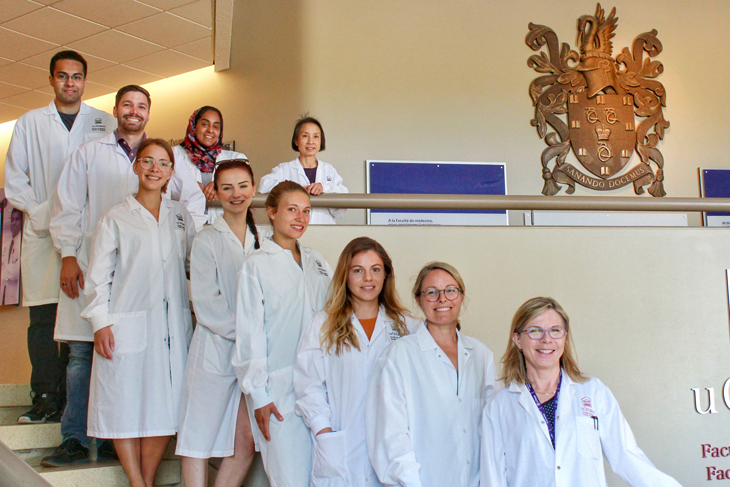
Some of the members of Dr. Harper’s Lab at the University of Ottawa. Photograph taken to celebrate the lab’s NSERC CREATE Award funding.

While completing my biochemistry degree, I started to get interested in food activism after experiencing firsthand the food insecurity crisis within the student population (because when you have a million things to pay for, rent, tuition and electricity generally get top priority) and I started thinking more about the idea of food independence. I became co-leader (and one of the few founding members) of a newly formed student club, AgroBishops. For 2 years I created workshops, campus events and fundraisers, all geared towards combating food waste and food insecurity on campus. During this time our small but mighty group started a community fridge and was awarded the Club Community Impact Award from the Bishops Student Representative Council.

The AgroBishops team in our first year of operation, accepting the Club Community Impact Award.

In the final semester of my undergrad, Bishops announced that they were adding a new department to their ranks, the Department of Sustainable Food Systems. They also announced that they will be offering a Permaculture Design Certificate over the “summer school” semester. Around the same time I was considering starting a post-graduate program, Sustainable Agriculture, at Fleming College but I was still very uncertain. “How could I possibly become a farmer? I have never lived in the country OR worked on a farm!” I thought to myself. The career path switch was daunting, but with the announcement of Bishop’s Permaculture Design Certificate program I immediately felt like things were falling perfectly into place, almost like it was fated. I would use the summer school Permaculture Design Certificate as a “farming trial” and if I liked it I would continue on to Fleming College’s Sustainable Agriculture program in the Fall. Well… I loved it and the rest was history!

Laughing Radish Eco Farm is the cumulation of my Post-Graduate Certificate in Sustainable Agriculture program. Every course taken as a part of this program was aimed towards teaching me how to successfully run a small but sustainable farm business. From vegetable crop planning, to livestock rotation, tractor training and even accounting! I learned it all!

…And Laughing Radish Eco Farm was born!

It is incredible to look back and see how far I’ve come in just a short amount of time. It feels like just yesterday I was sitting in class, thinking of a farm name and brainstorming logo ideas. My vision for the future of this blog is to share news and updates about Laughing Radish’s progress as we grow and develop, but also act as a way to reflect and show gratitude for the journey I am on. Of course, I’ll throw in my favourite seasonal recipes, stories and other fun surprises to spice things up as well! It has taken a lot of courage to completely uproot my comfortable life in science and make such a drastic “last minute” switch of career paths. However, with challenge comes growth and Laughing Radish feels like home. By feeding my community, I feed my soul.

If you’ve made it this far, THANK YOU so much! Dont be afraid to leave a comment and share what kind of content you’d like to see next!

Until next time,

Keep laughing,

Michaela
#zerotohero #organic #farm #homestead #sustainable #lifejourney #local
Uncategorized

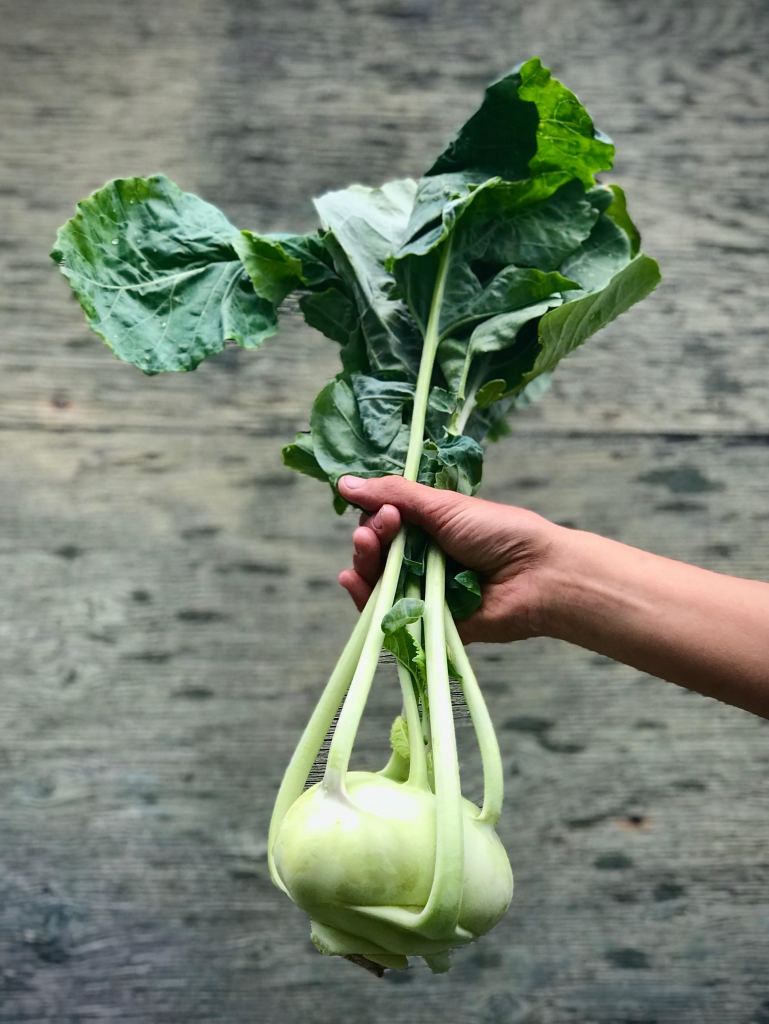
Weird Vegetable Club: Kohlrabi

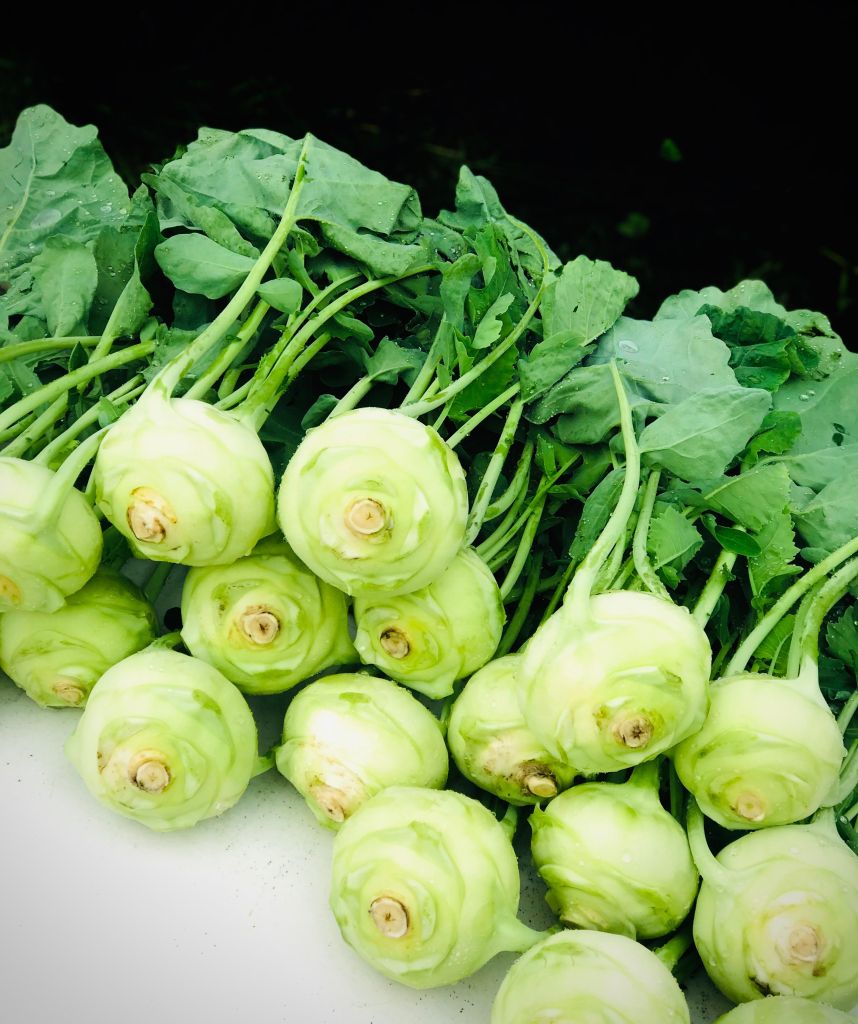
Have you ever heard of Kohlrabi? This weird vegetable club highlight is a member of the brassica family, meaning it is related to broccoli, cabbage and brussel sprouts. It grows vigorously in the cooler seasons, making it a fantastic spring and fall staple. It also acts as an excellent storage crop and when properly stored, can potentially last the entire winter!

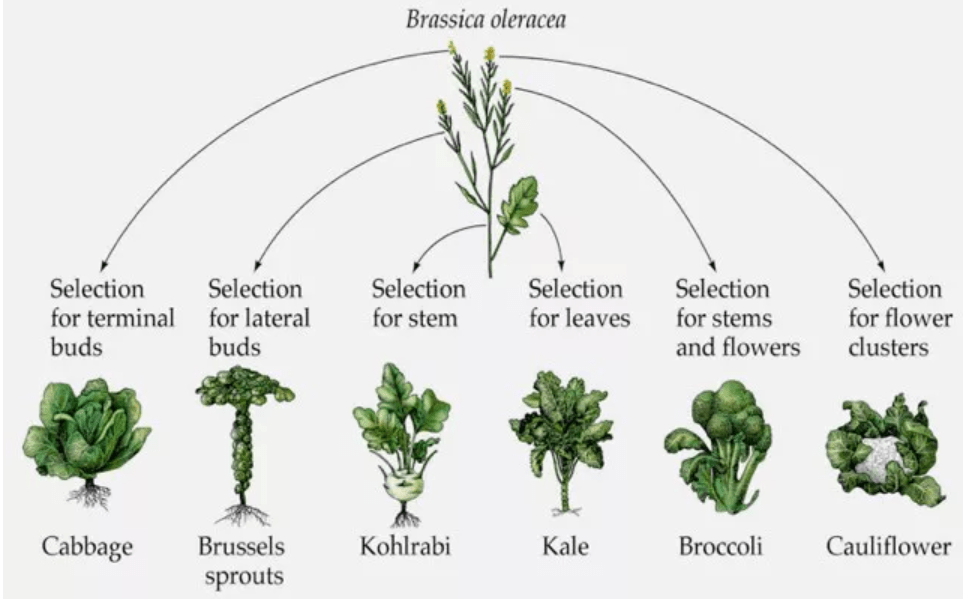
If you take a closer look at the genetics of kohlrabi, it comes from the ancient wild mustard plant. Over the evolution of this ancient brassica ancestor, several mutations occurred that caused its stem to thicken. After many years of growing and accumulating the new “thick stem” gene, the vegetable eventually evolved into today’s modern kohlrabi. This is actually how most modern brassicas came to be. They evolved from the same ancient wild mustard ancestor-but different genetic mutations resulted in each developing a different “preferred trait”. Broccoli contains the evolved flower, cabbage contains the evolved terminal leaf bud, brussel sprouts contains the evolved lateral leaf bud, and kohlrabi contains the evolved stem.

Evolution of modern brassicas from the common wild mustard ancestor

Kohlrabi has a crisp and sweet flavour for a vegetable. It has a cabbage-like flavour with hints of pear-like sweetness. Its texture is crisp and crunchy.

My friend and former co-worker from Plenty Wild Farms, Enid, is allergic to apples. She eats Kohlrabi sliced and raw as an apple replacement. I personally love to eat it roasted with salt and butter in a roasted vegetable medley. Ive also made a delicious cream of kohlrabi and kale soup. It is also fantastic shredded and used in a Coleslaw (or Kohlslaw, haha) instead of cabbage.

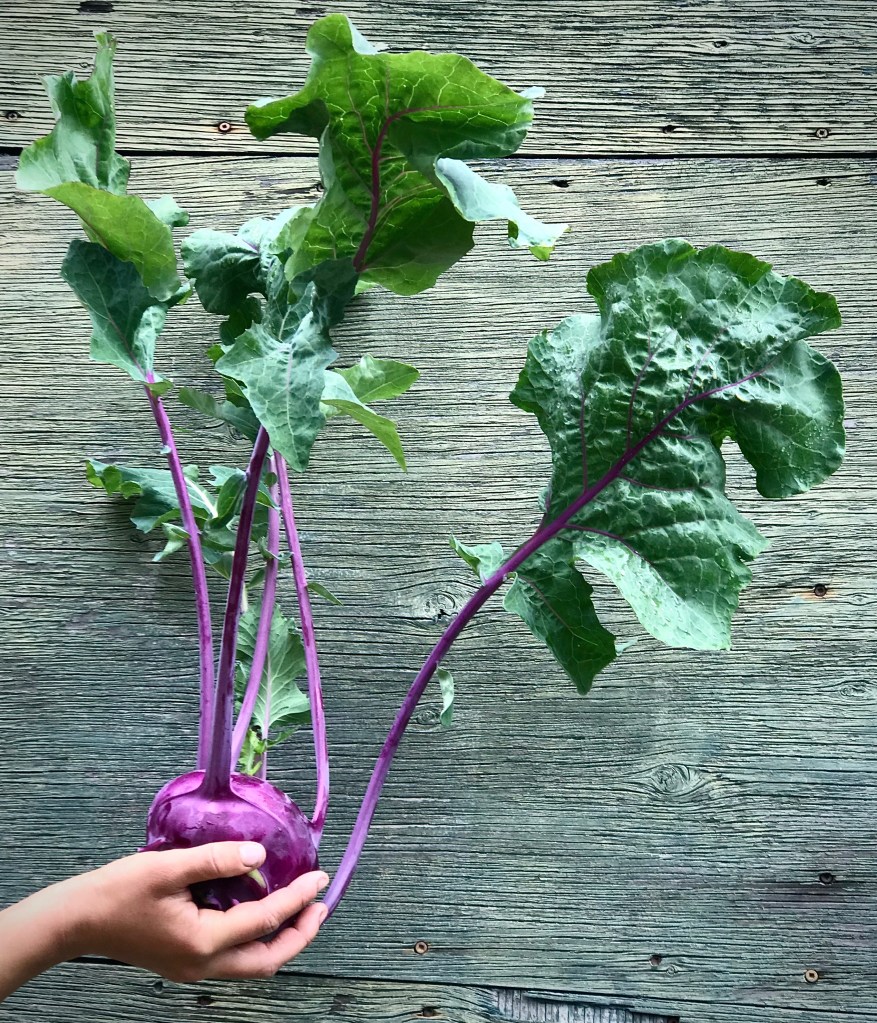
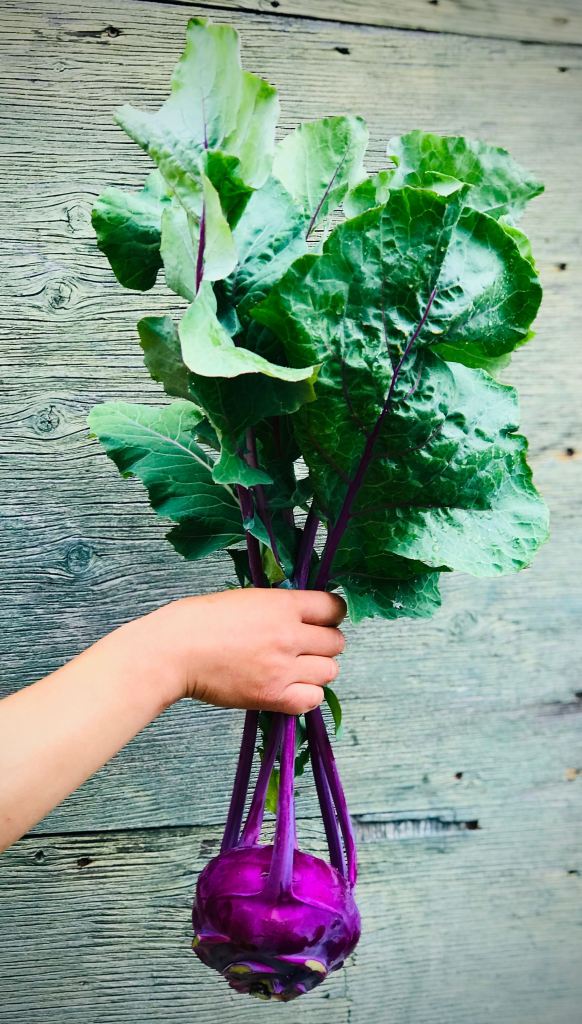
Purple Kohlrabi: Tastes the same as the green variety, but with purple skin and crisp white flesh.
Uncategorized

Intercropping: A Sustainable Farming Technique

What is Intercropping and how does it work?

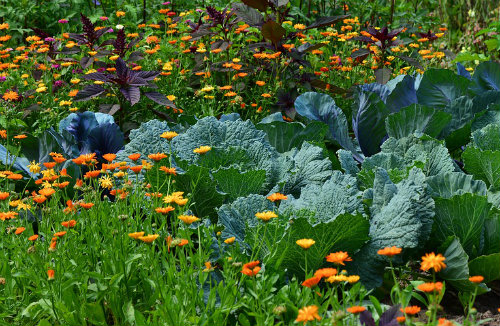
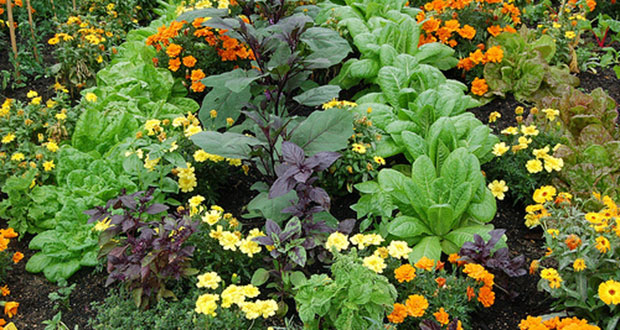
Intercropping is a sustainable agricultural technique that involves the intermixed planting of different crops in very close proximity. It is an all encompassing term that can be performed in a variety of ways, such as by growing crops that utilize different regions of space within a single row (Ex: a root crop interplanted with an above-ground fruiting crop in a single row), or by planting a second crop in the space between the rows of the first crop’s bed. The goal of intercropping is to have multiple crops within close enough proximity that the plants can interact with one another (Mohler & Stoner, n.d.), thus mimicking what happens in natural ecosystems.

When plants are allowed to interact with each other, they create diverse, biological systems that not only benefits the plants involved, but also the soil and biota (microbes, insects, pollinators, wildlife, etc.) that live within the system.

Intercropping improves the sustainable system in a variety of ways:

Use of resources

When multiple crops are interplanted in close proximity, they may be able to use the surrounding resources more effectively than if only a single crop was planted (Mohler & Stoner, n.d.). For example, intercropping lettuce within a bed of poorly germinated carrots allows you to make better use of the space, an all-important resource in farming. The carrots utilize the underground space and the lettuce uses the above ground space, thus competition between crops is eliminated. Plus, the non-germinated portions of the carrot bed are now being efficiently utilized instead of wasted, which increased the overall income this bed produces. Intercropping can also permit resources such as sunlight, water and soil nutrients to be utilized more efficiently through careful planning of the intercrop pairings.  

Lower pest density

Intercropping is a useful pest management technique. When multiple plant types are grown together in polyculture, the diversity confuses insect pests – especially those that feed on a single specific crop. Additionally, if the crop pairing is well planned the companion plants can be used to repel certain pests or attract beneficial predatory insects – who in turn help reduce the pest load (Mohler & Stoner, n.d.).

Improves soil structure

Intercropping improves soil structure in that your soil is held together by a diversity of different roots (Engels, 2016). A tap-rooted plant will help break up compaction and aerate the soil, and a fibrous rooted plant will prevent erosion and help absorb excess water after heavy rainfalls.  When these two root types work together, they improve soil structure and quality while occupying different regions of space, therefore avoiding resource competition.

More Financial Stability:

Intercropping, because it naturally incorporates more diversity, also provides the farmer with a more diverse product line. Instead of growing one crop type in a certain area, multiple are grown. If a crop fails, the farmer can rely on sales of the second crop rather than losing an entire season’s worth of income.  

Challenges associated with intercropping

Crop rotation is an essential aspect of sustainable farming and it is made much more difficult when intercropping is used. When plants of different families are grown in close proximity, you must plan your rotation so that neither of those families are repeated in the same block for at least 3 years (Mohler & Stoner, n.d.). This becomes very complicated when each field block contains more than one plant family. Thoroughly planning your crop rotation in advance is essential when using the intercropping technique.

Intercropping also requires very careful planning so that the crops do not negatively harm the system through competition of root space, aboveground space or nutrients (Engels, 2016). Poor plant pairings may also inhibit the growth of the intercrops, so a thorough understanding of companion planting is a must. Additionally, a plant pairing that worked in the past may not necessarily work in the future if the environmental conditions change and one plant becomes either favoured or hindered, throwing off the system’s delicate balance (Mohler & Stoner, n.d.).

Finally, intercropping requires precise timing for planting as the crops used will likely grow at different rates (Mohler & Stoner, n.d.). You must be able to balance the growth of both crops through timed planting so that the quicker crop doesn’t overgrow or cast shade and ultimately hinder the growth of the slower crop.

Examples of Intercropping:

The most well known example of intercropping is the Three Sisters Garden. This traditional indigenous intercropping technique utilises the growing habits of corn, beans and squash to grow a large volume of food, sustainably, in a small space. The corn has very shallow, fibrous roots which holds the soil together, preventing erosion and helping improve soil stability. It grows tall and becomes a support for the beans, whose roots fix nitrogen, adding to the soil nutrition. Finally, squash, a deep-rooted plant feeds from water and nutrients below the reach of the corn and bean roots, minimizing competition. It also grows very large and leafy, blocking out weeds and keeping pests such as racoons away from the corn and beans. All three of these plants interact and support each other. In fact, they grow better when intercropped together than when grown individually (Kimmerer, 2013).

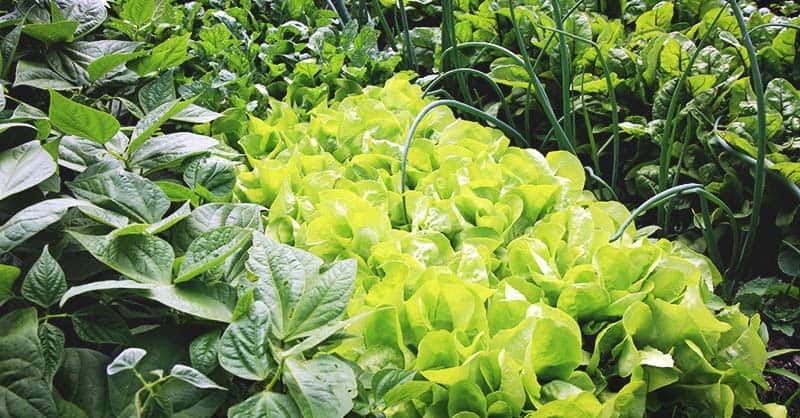
Another example of intercropping is planting lettuce around the base of tomato plants. As the tomatoes grow, they vine up and away from the soil. Lettuce remains close to the soil even when fully mature and acts as weed suppression, blocking out weeds that may impact the tomato growth. This intercropping allows you to maximize the profitability and space within your bed AND minimizes the amount of weeding required to keep the row tidy.

Real World Statistics:

According to a study put on by the University of Manitoba, the technique of intercropping produced a Land Equivalency Ration (LER) of above 1, meaning the crops produced higher yields when intercropped than when grown in monoculture for the same area of land use, for all types of intercrops studied (University of Manitoba, 2014).  This study also found that the more intercropping occurred, the lower the pest and weed pressure; so they recommend growing as many different companion plants together as feasibly possible (University of Manitoba, 2014). Finally, on a conventional scale, intercropping produces overyield in about 75% of cases and is highly feasible (University of Manitoba, 2014).

According to a study performed in Australia by Lithourgidis, Dordas, Damalas, and Vlachostergios, “Various types of intercropping were known and presumably employed in ancient Greece about 300 B.C” (Lithourgidis, Dordas, Damalas & Vlachostergios, 2011), so this method of agriculture has truly withstood the test of time.  Additionally, intercrop systems are currently being used for an estimated 15-20% of the world’s food supply, primarily in Indigenous and global south communities (Lithourgidis, Dordas, Damalas & Vlachostergios, 2011).

Conclusion:

Often misunderstood, the role of farmers is to feed their community, not the world. If farmers worldwide switch to diverse, small-scale, intercropped agricultural systems, a lot of the problems that persist in agriculture today will improve. They will be able to provide their local communities with a diverse offering of highly nutritious fruits, vegetables and animal products while regenerating the health of the ecosystem, rather than draining it. Not only does intercropping increase yield, it promotes an improved use of resources, reduced pest and weed pressure, healthier soils and more financial stability. Overall, the use of intercropping is an extremely beneficial sustainable farming technique that should be employed by farmers, replacing conventional systems.  We use intercropping at Laughing Radish Eco Farm because it allows us to maximize our farm’s efficiency while promoting the health of our overall system. It might take more planning than a traditional market garden, but the extra planning is worth it. We are rewarded with a beautiful, healthy, holistic ECO farm.

References:

Engels, J. (August 12, 2016). Intercropping: What it is, What it isn’t, and Why we do it. Permaculture Research Institute. Retrieved from https://www.permaculturenews.org/2016/08/12/intercropping-what-it-is-what-it-isnt-and-why-we-do-it/

Kimmerer, R.W. (2013). Braiding Sweetgrass. Minneapolis, MN. Milkweed Editions

Lithourgidis, A.S., Dordas, C.A., Damalas, C.A., Vlachostergios, D.N. (2011). Annual Intercrops: An alternative pathway for sustainable agriculture. Australian Journal of Crop Science. Retrieved from https://www.researchgate.net/publication/224934832_Annual_intercrops_An_alternative_pathway_for_sustainable_agriculture

Mohler C.L. & Stoner K.A. (n.d.) Guidelines for Intercropping. Sustainable Agriculture Research and Education. Retrieved from https://www.sare.org/Learning-Center/Books/Crop-Rotation-on-Organic-Farms/Text-Version/Guidelines-for-Intercropping

University of Manitoba. (2014). Agronomic Benefits of Intercropping in Manitoba. University of Manitoba Natural Systems Agriculture. Retrieved from http://www.umanitoba.ca/outreach/naturalagriculture/articles/intercrop.html